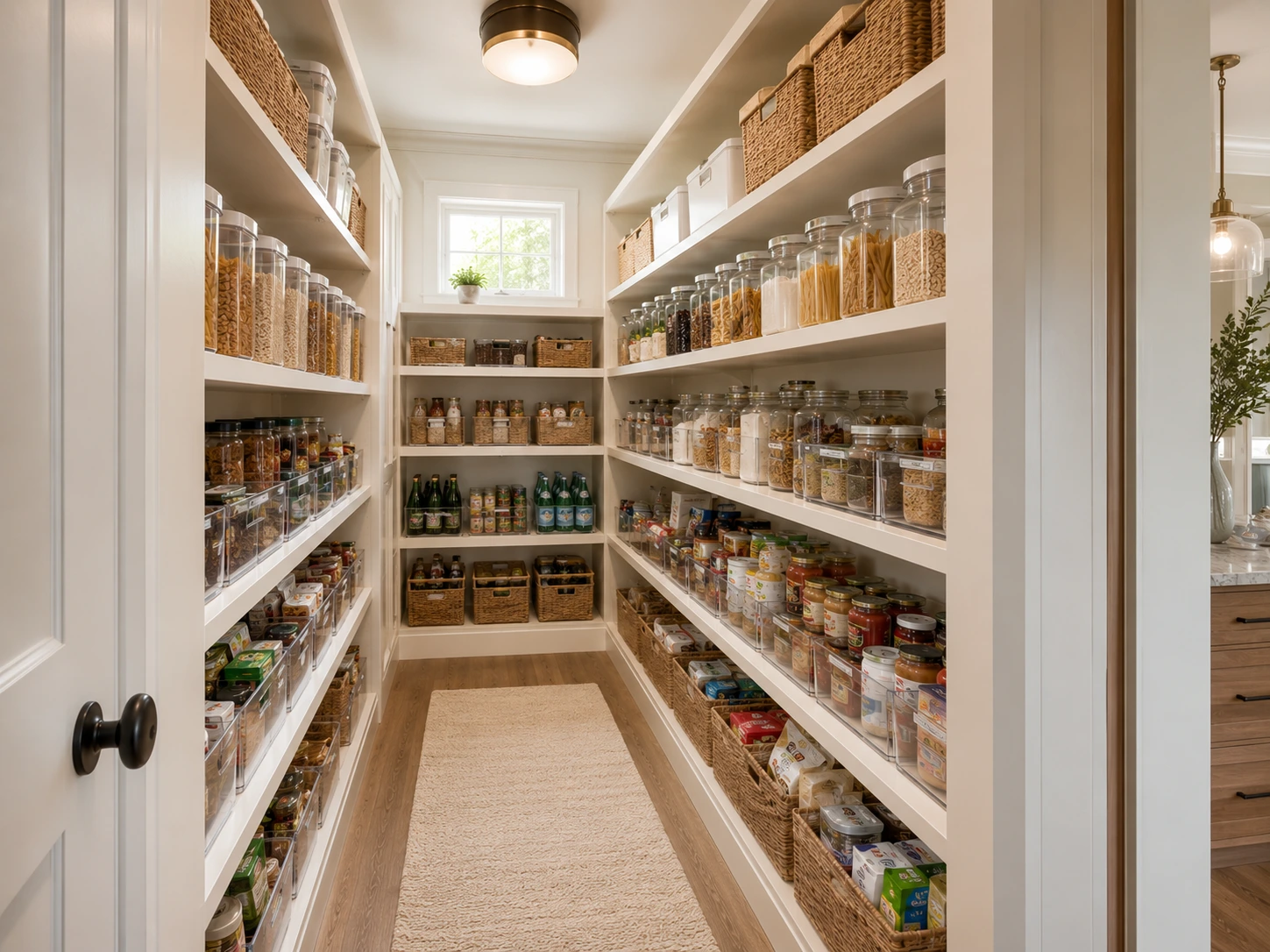
Deep Pantry Organization Ideas That Make Every Shelf Easier to Use
Deep pantry shelves give you plenty of storage, but that extra depth can make everyday items difficult to see and reach. The right organization system can make food easier to see, reach, and put away without wasting valuable storage space.
Whether you have a walk-in pantry, deep cabinet, narrow pantry, or shelves around 24 inches deep, these practical ideas can help you create a system that is easier to maintain.
Explore Deep Pantry Solutions →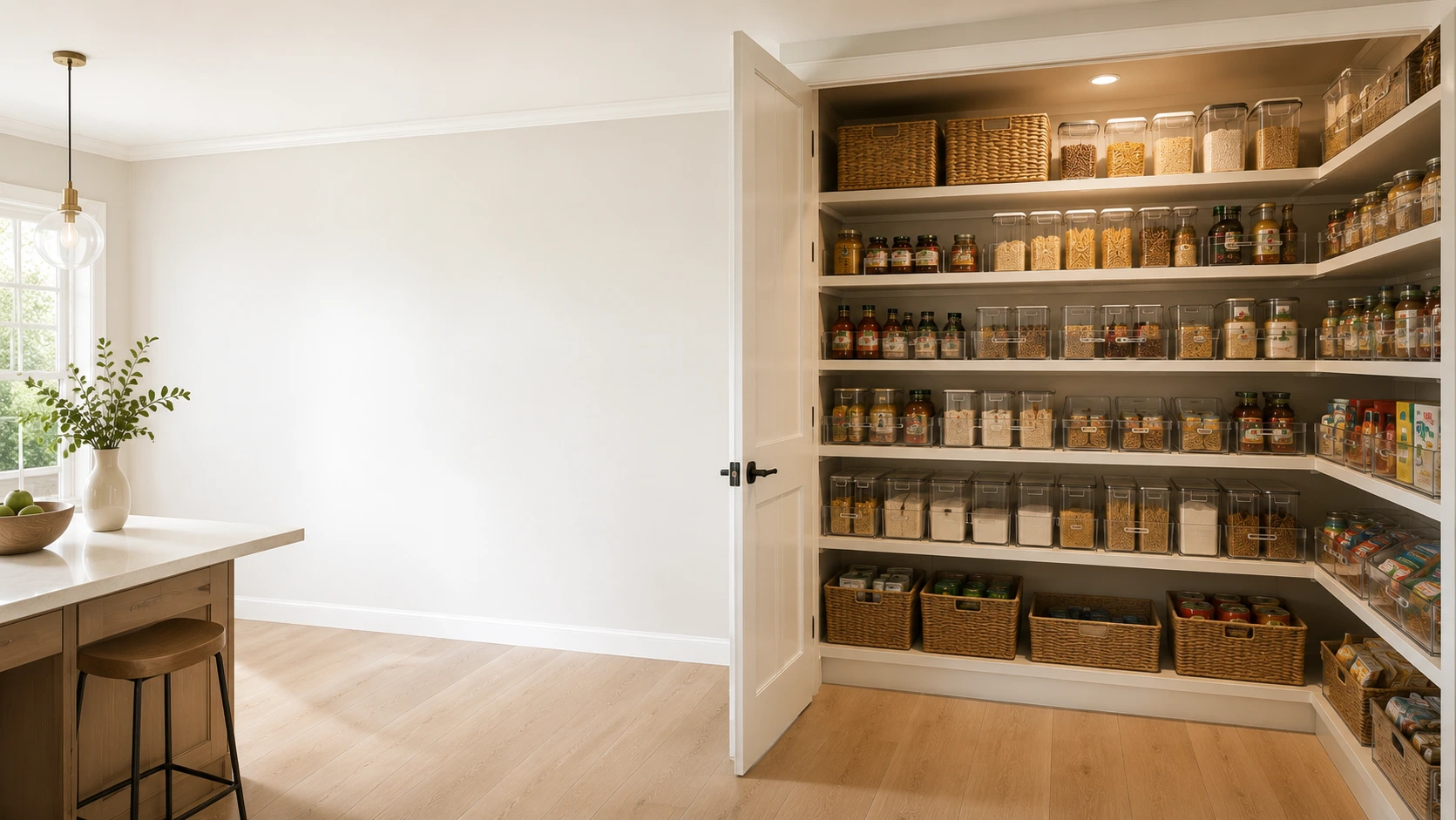
Extra Depth Is Useful—Until You Can’t Reach What You Need
The goal isn’t simply to fit more food. A good deep-pantry system keeps everyday items visible, reachable, grouped, and easy to put back.
Hidden Items
Small jars and packages can disappear behind larger containers, causing forgotten food and duplicate purchases.
Wasted Depth
Filling a deep shelf from front to back can create empty or unusable space unless items are grouped into manageable zones.
Hard-to-Reach Storage
Items stored at the back become frustrating to retrieve when nothing slides, pulls out, or rotates.
Cluttered Front Rows
When everything is pushed forward, the front of the shelf looks organized while the space behind it becomes difficult to manage.
10 Deep Pantry Organization Ideas
Start with the solutions that match the way you actually use your pantry. You do not need every organizer—just the right ones for your shelves.
Use Pull-Out Bins
Turn deep shelf space into accessible drawers so back-row items come forward instead of getting buried.
Add Clear Storage Bins
Group similar foods into transparent bins so you can see categories and pull an entire group forward.
Raise the Back Row
Shelf risers create a second visual level, making cans and jars at the back easier to identify.
Use Lazy Susans for Jars
Rotating trays make sauces, condiments, oils, and small jars easier to access without reaching around them.
Create Food Zones
Keep breakfast foods, baking supplies, snacks, canned goods, and cooking ingredients in defined zones.
Store Tall Items Together
Keep bottles, cereal boxes, and tall packages in dedicated areas so they do not block shorter items.
Label Bins and Categories
Simple labels make shared storage easier to maintain and reduce the temptation to put items anywhere.
Use Door Storage
Move small bottles, packets, spices, and frequently used items onto the inside of pantry doors.
Reserve Back Shelves for Backup Stock
Less frequently used extras can live deeper in the pantry while everyday items stay within easy reach.
Keep Heavy Items Low
Store bulkier and heavier foods on lower shelves where they are easier and safer to remove.
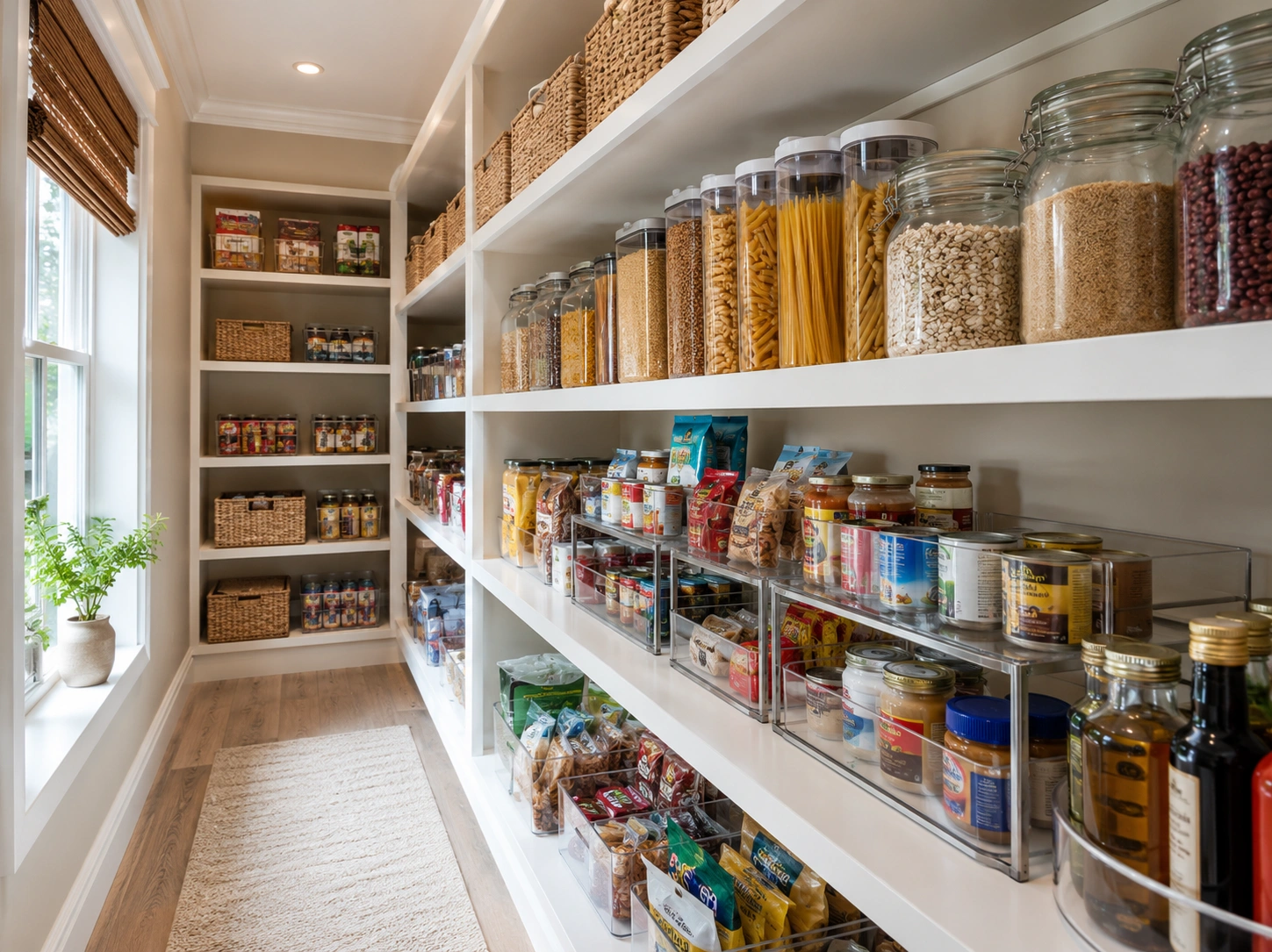
Make the Back of Every Shelf Work for You
The biggest mistake with deep shelves is treating them like shallow shelves. Instead of creating one long row of food, divide the depth into accessible zones.
Use bins, risers, and rotating organizers according to the type of food and how frequently you use it.
- Put everyday foods where they are easiest to reach.
- Use bins to turn deep space into pull-forward zones.
- Raise shorter containers behind taller front containers.
- Keep backup inventory separate from daily-use items.
Small, Narrow, and Deep Pantry Configurations
Different pantry shapes need different solutions. Match the organizer to the available width, depth, and access points.
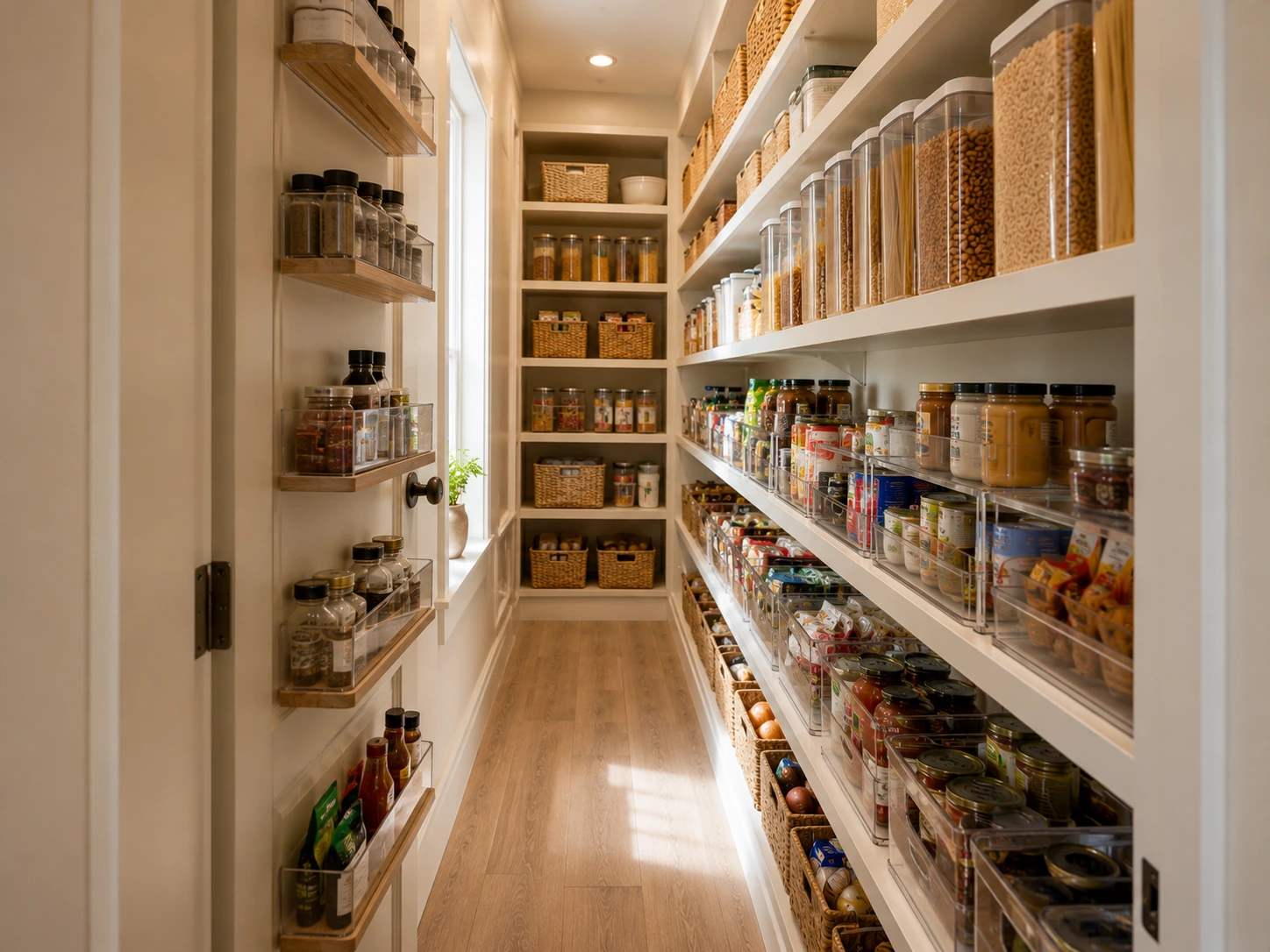
Small & Narrow Pantries
Use vertical storage, slim bins, and door organizers to maximize limited width.
24-Inch Deep Pantries
Pull-out bins, risers, and turntables help prevent the back half from becoming dead space.
Deep Pantry Cabinets
Use adjustable zones and pull-forward containers to keep the entire cabinet visible.
Very Deep Shelves
Reserve the deepest areas for backup stock and use accessible organizers for everyday items.
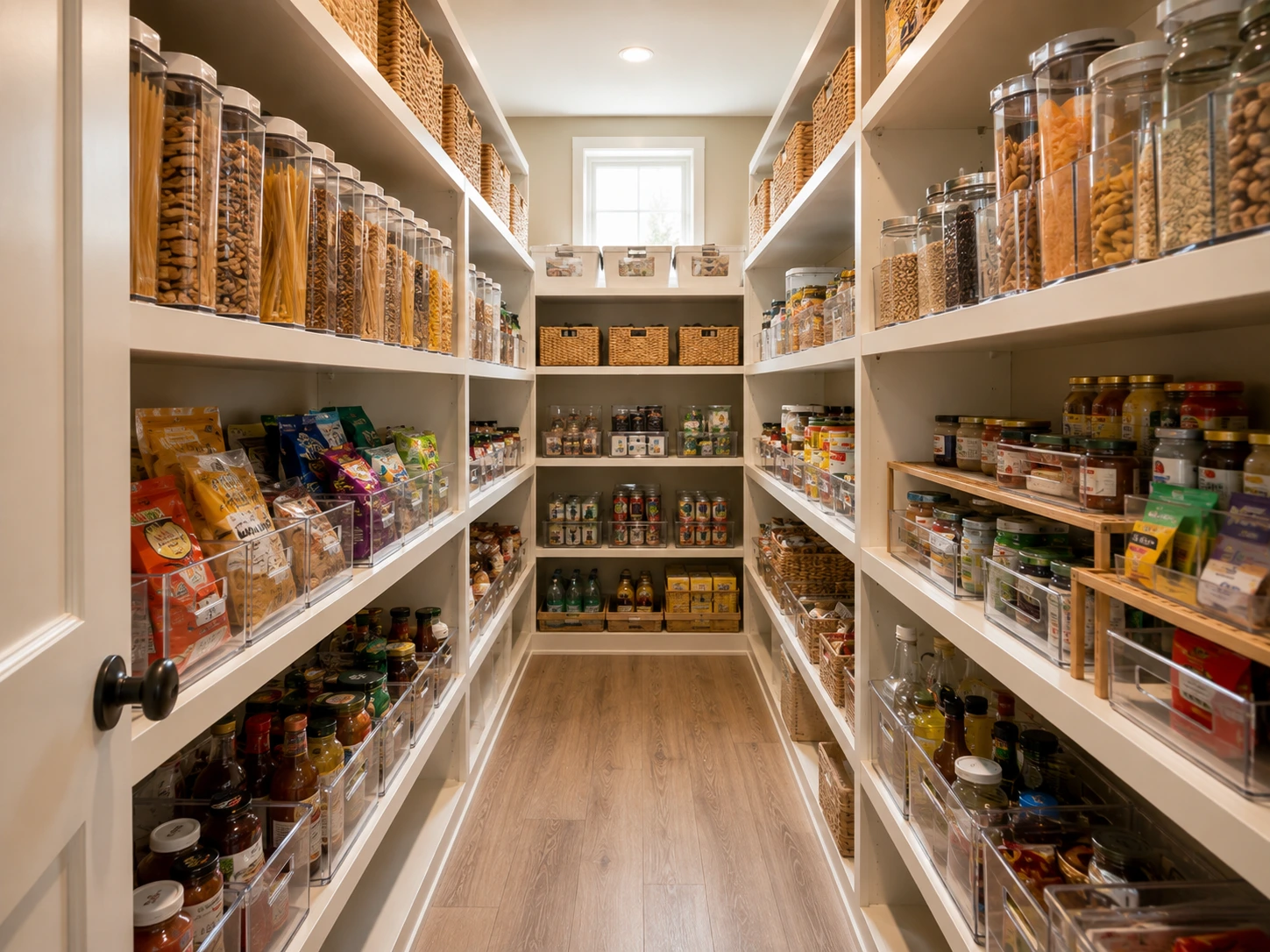
Organize by Access, Not Just by Category
A pantry can be perfectly categorized and still be frustrating if the items you use most are hidden behind everything else.
Think in layers: everyday items in the easiest zone, less-used items farther back, and backup inventory in the deepest or lowest spaces.
See Helpful Pantry Organizers →Pantry Products That Solve Common Deep-Shelf Problems
The right organizer depends on the problem: visibility, access, wasted vertical space, or items disappearing into deep corners. These are practical product types to consider.
Some product links on this page are affiliate links. If you buy through them, we may earn a commission at no extra cost to you.

Clear Storage Bins
- Clear plastic makes contents easy to see
- Built-in handles make bins easy to move
- Useful for grouping pantry categories together
Product details and availability can change on Amazon.

Shelf Risers
- Raises items so the back row is easier to see
- Three-tier design adds vertical display space
- Useful in kitchen cabinets and pantry shelves
Product details and availability can change on Amazon.

Pull-Out Storage
- Pull-out drawers bring stored items forward
- Movable dividers help organize smaller items
- Useful for spices, cans, snacks and bottles
Product details and availability can change on Amazon.

Lazy Susans
- 360-degree rotation brings items into view
- Two tiers add storage without extra width
- Raised edge helps keep jars and bottles in place
Product details and availability can change on Amazon.

Door Storage
- Turns unused door space into storage
- Six main compartments add vertical capacity
- Mesh pockets keep small items visible and accessible
Product details and availability can change on Amazon.
Common Deep Pantry Organization Mistakes
More storage does not automatically mean better storage. Avoid systems that look tidy but make everyday access harder.
Putting everyday items at the very back
Keep high-use items in the front or inside pull-forward bins.
Stacking cans too high
Use risers so every row remains visible.
Mixing unrelated categories
Give each major food category its own defined zone.
Using every inch for extra inventory
Leave enough access space so items can actually be removed and returned.
Deep Pantry Organization FAQ
How do I organize a very deep pantry?
Divide the depth into accessible zones. Keep everyday items toward the front, use pull-forward bins or rotating organizers for difficult areas, and reserve the deepest spaces for backup inventory.
How do I stop items getting lost at the back of deep shelves?
Use clear bins, pull-out organizers, shelf risers, and rotating trays. The objective is to bring the back area into view instead of relying on long rows.
Are clear bins good for deep pantry shelves?
Yes, when used for grouped categories. They can make smaller packages easier to see and allow several items to move together as one unit.
What should go at the back of a deep pantry?
Less frequently used items and backup stock generally make more sense in deeper areas, while frequently used food should remain easier to access.
How can I organize a narrow deep pantry?
Prioritize vertical space, slim containers, door storage, and organizers that bring items forward. Avoid creating several hidden layers of loose products.
What is the best way to organize 24-inch-deep pantry shelves?
Use the depth deliberately: group food into pull-forward bins, raise back rows with risers, and place low-use inventory deeper than everyday items.
Make Your Deep Pantry Easier to Use
Start with the areas that cause the most frustration. A few well-chosen organizers can make deep shelves easier to see, reach, and maintain.
Explore Pantry Organizer Options →